During Great Big Green Week, St Bees Green Future shared energy and money saving tips via social media and St Bees News.
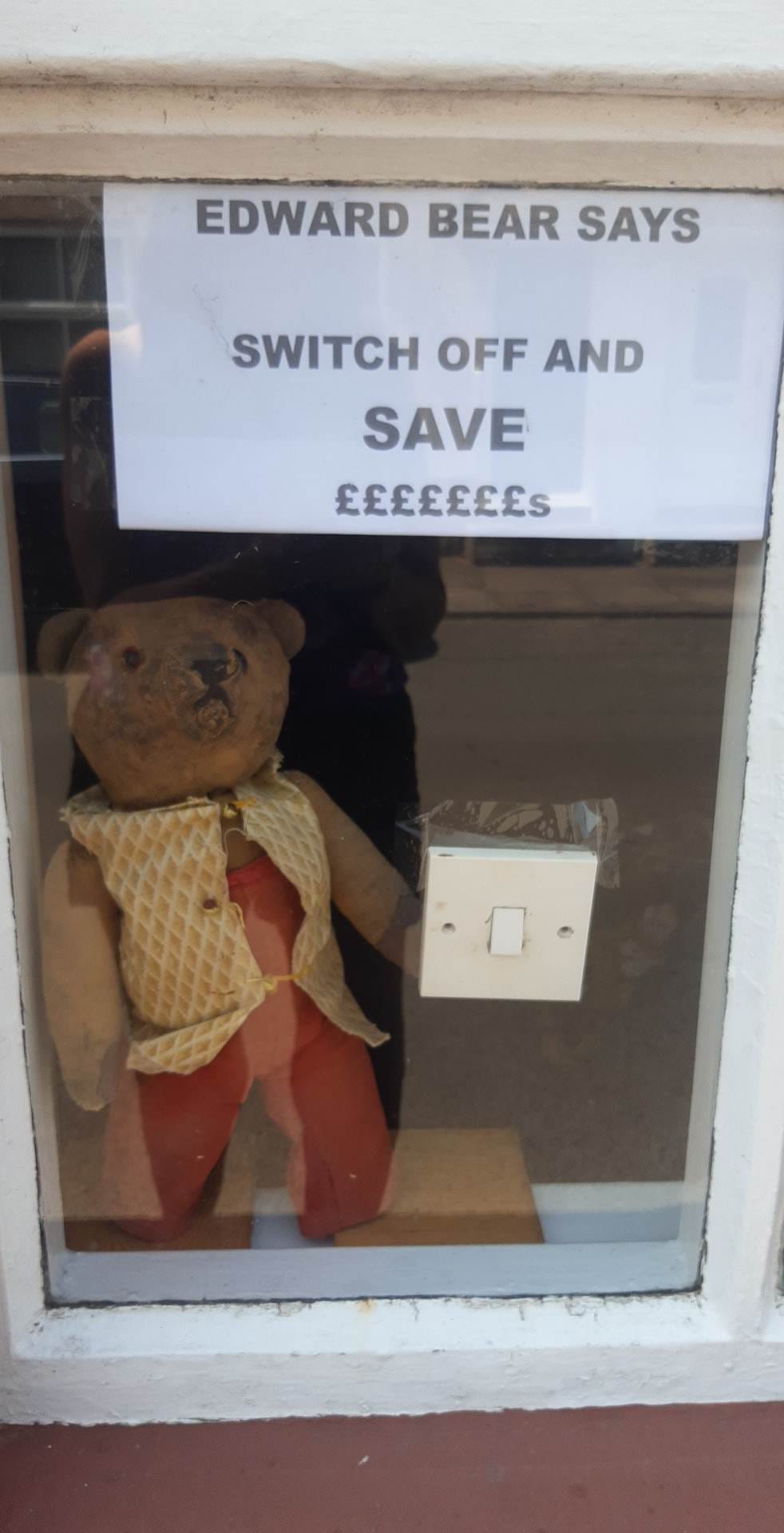
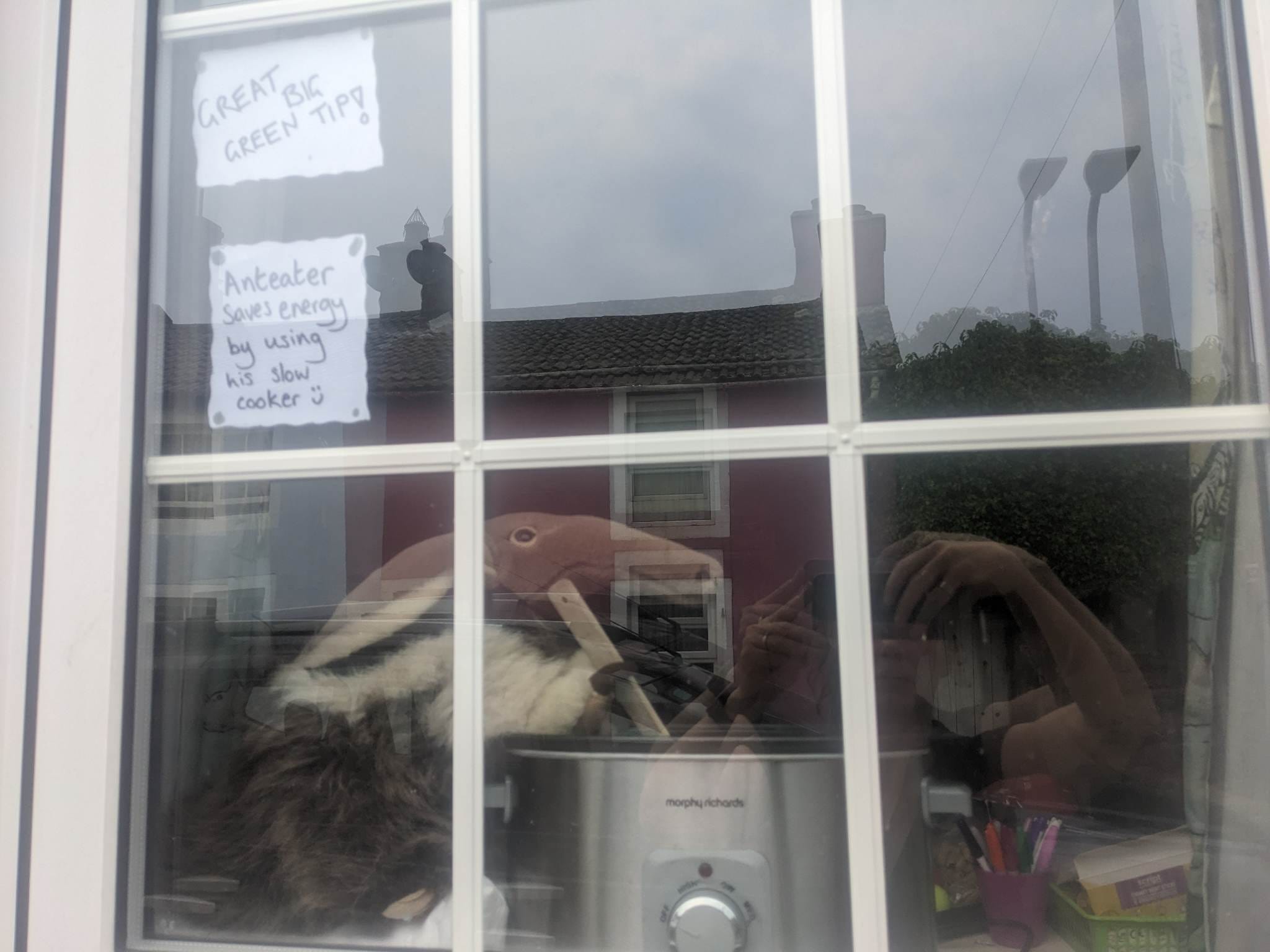
Energy saving tips from turning off lights and not using standby to line drying clothes, using a slow cooker and only boiling as much water as you need were also depicted in scenes along Main Street and Sea Mill Lane.
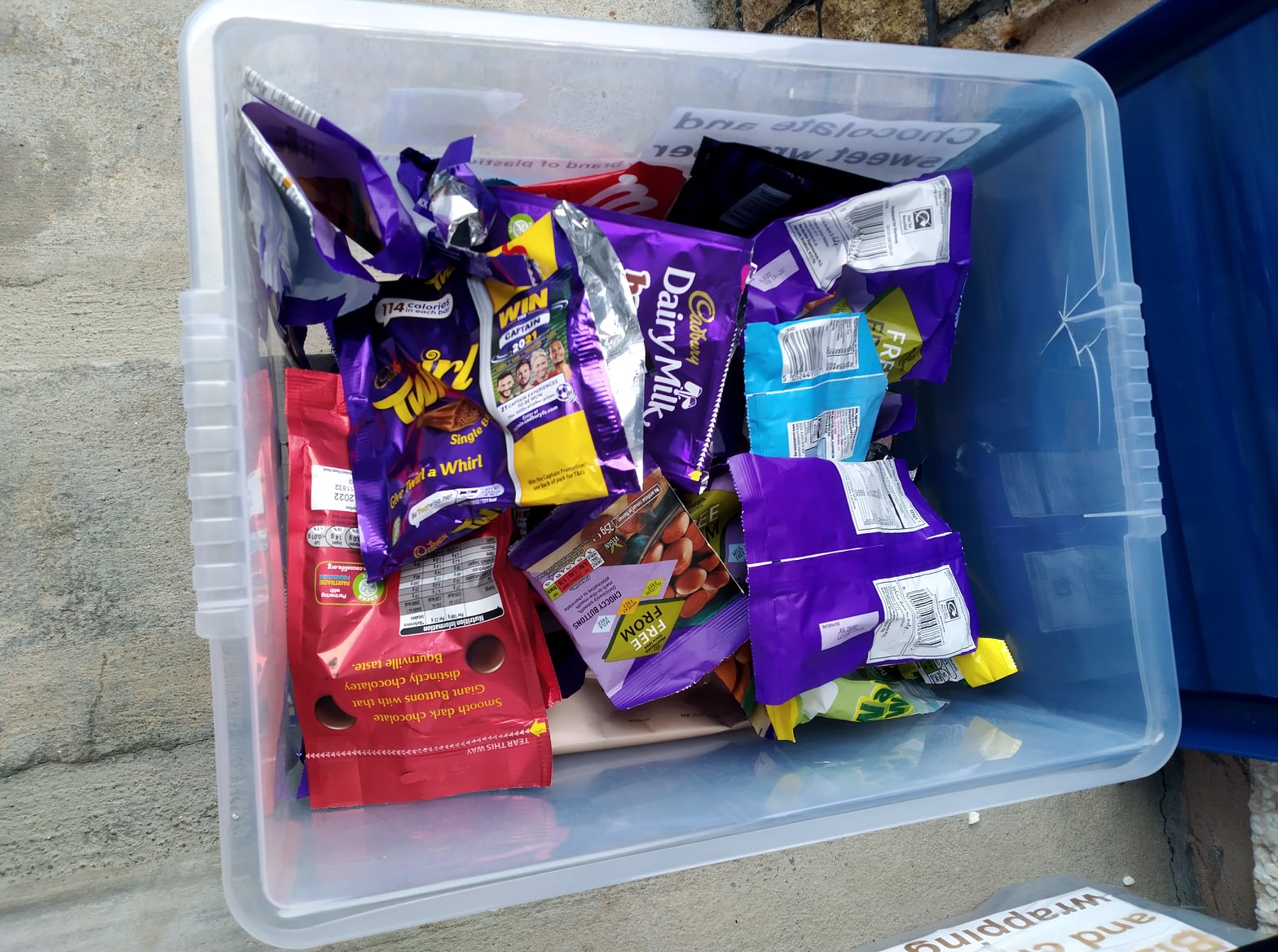
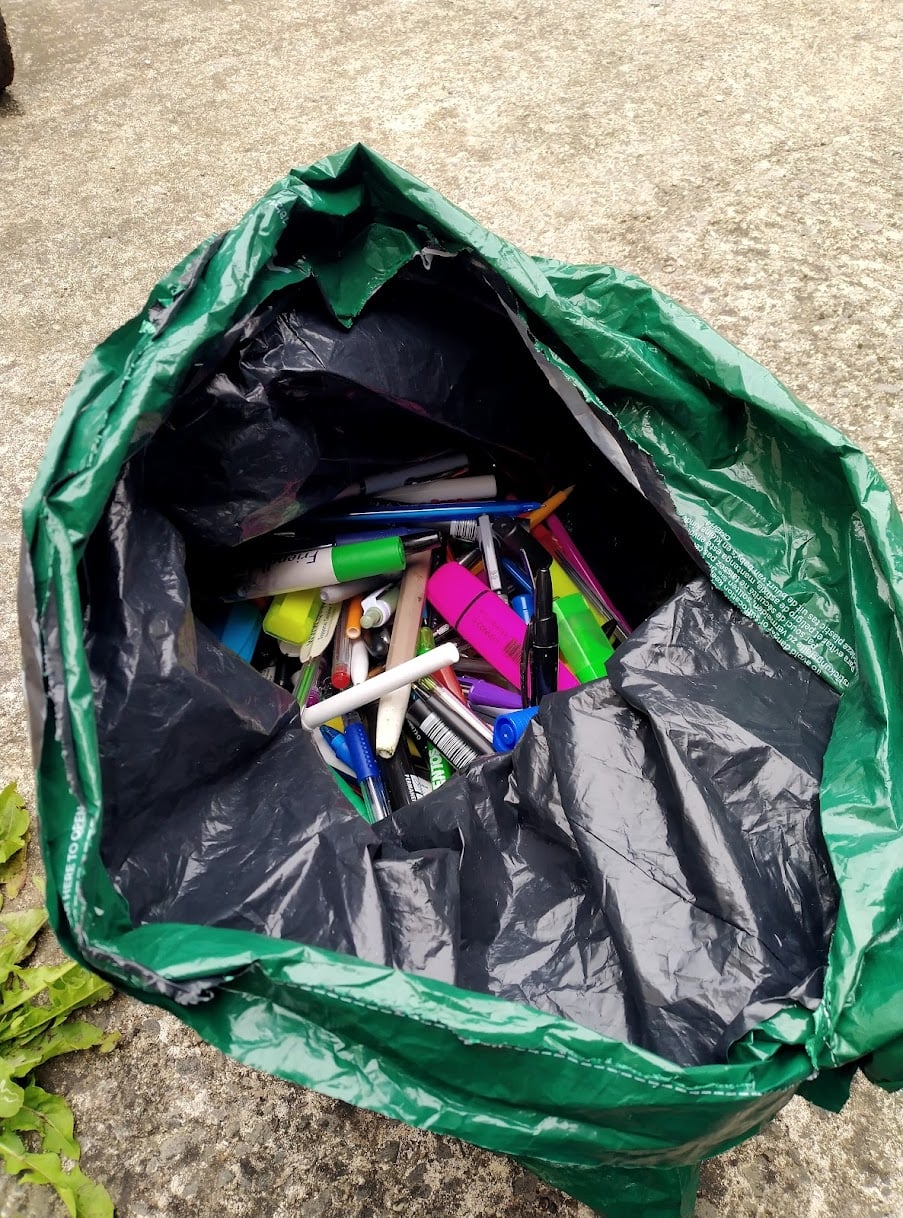
What happens to the dental products, medicine blister packs, pens and soft plastics once you drop them off at the collection points in St Bees? It’s a good question, as there is concern over what happens to a lot of the plastic that is collected for recycling in the UK.
The first step of the journey is dropping the waste items off at the nearest official collector for each waste stream. No special journeys are made to do so though; the items are stored until a member of St Bees Green Future is going to Workington, Cockermouth or Carlisle. The official collectors then send them on to a material recovery facility run by either TerraCycle or Veolia.
TerraCycle offers free recycling programmes for items that aren’t collected by local councils; these tend to be mixed materials that are harder to recycle, such as toothpaste tubes, pens and snack packaging. The recycling schemes we take part in are free, as they are sponsored by manufacturers. Similarly, Superdrug has partnered with Veolia to recycle medicine blister packs.
The waste collected from TerraCycle’s schemes is sorted, washed and processed in the UK. Plastics are shredded, melted and turned into pellets, flakes or powder. These can then be used by manufacturers to produce containers, bins, watering cans, outdoor furniture, decking and surfaces, such as those you find on playgrounds. Metals are shredded and smelted into metal sheets and bars for further use.
The waste sent to Veolia’s facilities goes through a similar process and they guarantee 100% recycling after residues and contaminants are removed.
You wouldn’t have thought so many people had pens to recycle, but they did. The same was true for dental items, snack wrappers and medicine blister packs.
The idea for a sustainability group in St Bees came from the interest in using the recycling points for these harder to recycle plastics around the village. If people were keen to recycle items that would otherwise be binned, what else could we do as a community towards reducing waste and our carbon footprint?
St Bees Green Future began in July 2021 as a Facebook group; a place to share ideas for how we can live sustainably and encourage other people to do the same. Although we have held several online meetings via Zoom since then, the St Bees Green Future Facebook group is still active and that’s where most agenda items start as ideas.
Sustainable Choices – Reduce Reuse Recycle
The group decided to focus its initial efforts on reducing consumption of new goods by organising swap events, where people can bring their preloved items along to swap for something else. There was most interest in organising clothes swaps, so that is where we started. We held our first clothes swap in May 2022 at Adams Recreation Ground and since then we have run quarterly clothes swaps there.
There was also interest among members of St Bees Green Future to set up a repair café, where broken items, from clothing and furniture to bikes and tools, could be brought along to be fixed by volunteers. Although a small number of volunteers with repair skills from the parish were interested in getting involved, we started to make enquiries about running a repair café in Egremont. However, as the Revive programme at Mirehouse will include a repair café, we are waiting to hear further information before taking this project any further.
We have since held a preloved toy and book stall at the 2022 Bees Bash and a further two preloved events for children’s items at St Bees Village School. Our most recent preloved children’s event was run jointly with St Bees Village School Association and the two groups plan to organise further preloved events to raise money for St Bees Village School.
Planting for Pollinators
Cumbria Wildlife Trust and Cumbria County Council have worked to reverse pollinator decline across north and west Cumbria by creating, improving and connecting pollinator-friendly habitats. This provides food, shelter and nesting spots for bees, butterflies and other pollinating insects.
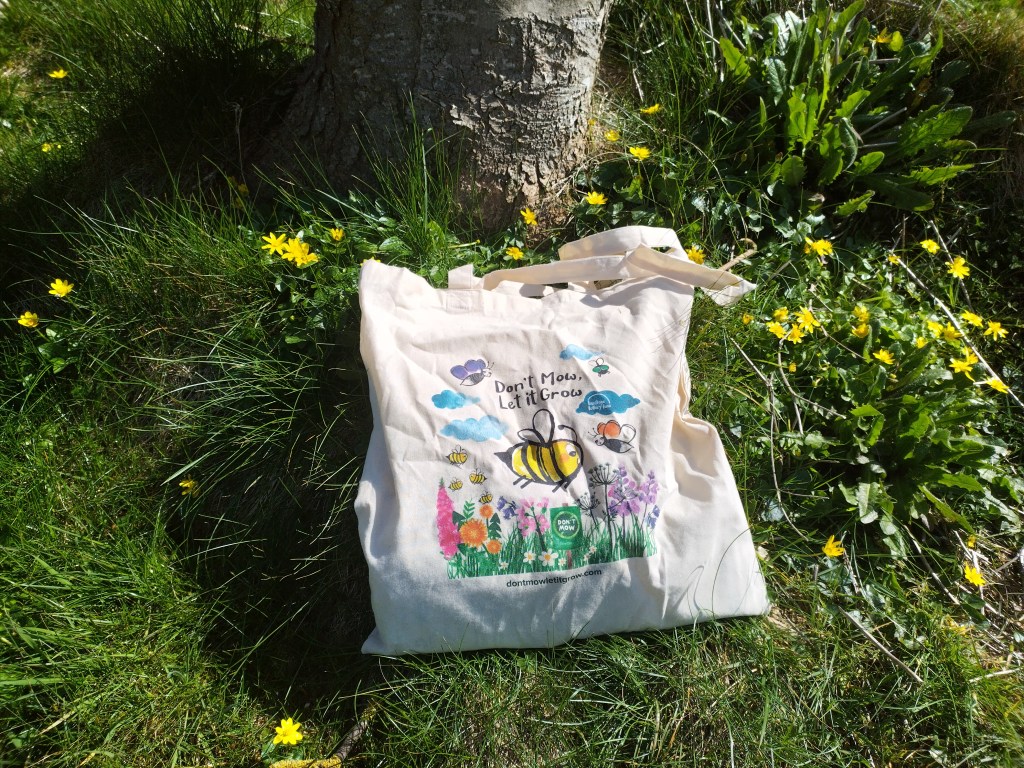
As part of this Planting for Pollinators project, St Bees Green Future received 100 packets of local wildflower seeds and information booklets about pollinator-friendly gardening to distribute. The wildflower seeds were given to residents that expressed an interest, and the remainder will go to families via St Bees Village School and the local Beaver group.
Great Big Green Week
In 2022 St Bees Green Future ran a community craft event during Great Big Green Week – a UK-wide celebration of community action to tackle climate change. We used fabric scraps and leftover craft items to create bunting and a welcome sign for use at events. There was also a craft station to decorate a green heart – the symbol for caring about climate change. The highlight for children was using a sewing machine to stitch the bunting fabric!
We are currently organising events for this year’s Great Big Green Week, which runs 10th to 18th June. Look out for details!
Working Together
St Bees Green Future also has representation on St Bees Parish Council’s Climate Change Working Group. As part of this group, we are working with parish councillors and other community members to explore how as a community we can take further steps to act on climate change.
Keep up to date with the activities of St Bees Green Future via our email newsletter – contact stbeesgreenfuture@gmail.com to subscribe.
Find out about the steps our community is already taking towards a more sustainable future and be inspired to get involved.
St Bees Green Future, St Bees Parish Council, Adams Recreation Ground, the Community Garden, Eco Church and the schools are already taking action to protect the environment and reduce our carbon footprint.
Reduce reuse recycle
While we have recycling collection points in St Bees for various items of waste, recycling is always a last resort. So, for items still with lots of life left in them, we reuse what we can. We have Facebook groups for the parish to buy and sell or share, swap and give away items. St Bees Green Future organise swap events and preloved sales, and there is also a Little Free Library in St Bees. These opportunities allow us to pass on and use preloved goods. And by doing so, we reduce our reliance on new items.
Food growing
St Bees Parish Council provide allotments for residents. The Community Garden (next to St Bees Priory) produces fruit and vegetables, with produce available to residents and visitors. St Bees Village Primary School is also developing a vegetable plot and orchard, which the children and their families will benefit from.
Transport
St Bees Parish Council proposed a near-level traffic-free cycle track along the valley between St Bees and Mirehouse, which is now part of the Whitehaven Local Cycling and Walking Infrastructure Plan. Commuters, leisure cyclists and walkers alike would benefit from this route.
St Bees Parish Council has also proposed a Travel Hub at St Bees Train Station. The extension of the station car park would help encourage rail travel by commuters. The plan also includes charging points for electric vehicles and e-bikes, as well as improved cycle parking.
Energy
Community energy includes collective action to install renewable energy systems for the benefit of the community, as well as tackling fuel poverty and reducing energy use. Community energy is one of the topics that St Bees Parish Council’s Climate Change Working Group will explore.
Rewilding
As well as Priory Paddock, a wildflower and conservation site, rewilding projects are also underway along the verge on Beach Road, at Adams Recreation Ground, in the Community Garden and in the grounds of St Bees Village Primary School.
Tree planting
St Bees Parish Council plants trees in the parish. The schools and Adams Recreation Ground also undertake tree planting in their grounds.
Subscribe to keep up to date with our sustainability projects in St Bees.





 Sustainable St Bees