Bees, wasps, hoverflies, butterflies, moths and beetles play an essential role in pollinating flowers, shrubs, trees and crops. However, due to the loss of flower-rich habitats over the last 50 years, pollinator species have declined. Developing habitats that encourage pollinators can help to reverse their decline.
Cumbria Wildlife Trust has been delivering its Planting for Pollinators project, working with communities across north and west Cumbria to increase flower-rich habits and increase number and diversity of pollinators.
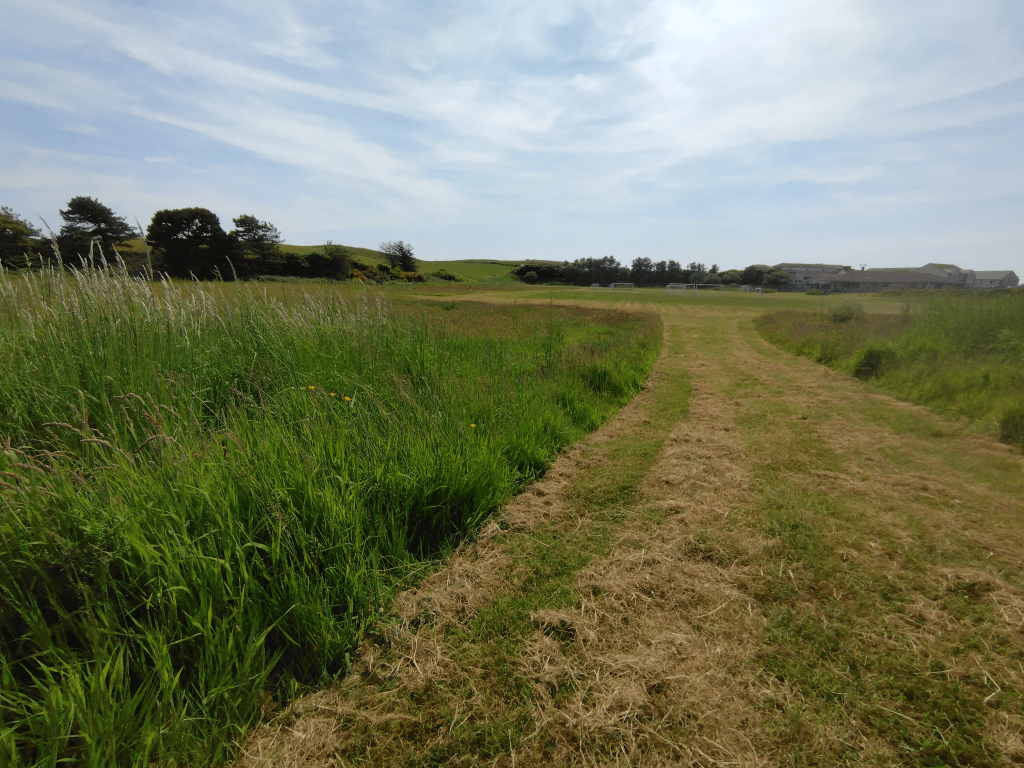
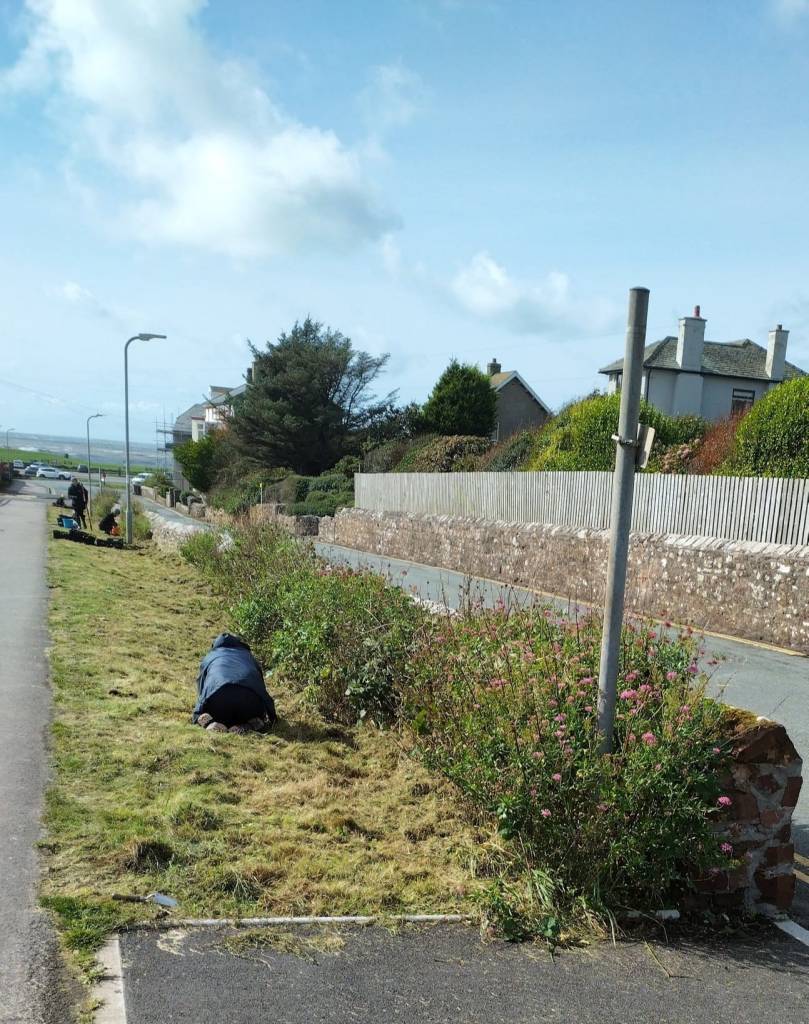
In St Bees Cumbria Wildlife Trust has worked with Adams Recreation Ground, the Community Garden and St Bees Parish Council to help develop pollinator habits in three areas of the village. In autumn 2022 wildflower seeds were sown at Adams Recreation Ground to create a wildflower meadow and wildflower plug plants were also planted in the Community Garden. This September wildflower plug plants were planted in the verge behind the wall on Beach Road with the help of pupils from St Bees Village School.
One of the volunteers from the Community Garden describes the help offered by Cumbria Wildlife Trust as part of this project:
“Last year Cumbria Wildlife Trust supported the Community Garden through the Planting for Pollinators Project. They met us and surveyed the grounds and what was there and set us up with a management plan containing lots of useful advice on how to manage the garden long term. They offered a work day of free labour (CWT volunteers) to help us clear more ground and in the autumn provided us with some wild flower plug plants and, finally, some tools to add to our kit. All much appreciated.”
Cumbria Wildlife Trust also provided St Bees Green Future with wildflower seed packets to distribute among residents keen to provide pollinator-friendly habitats in their own gardens, as we can all take action to help reverse the decline of pollinators.
Wildflower meadow at Adams Recreation GroundPlanting wildflower plug plants along Beach Road
You wouldn’t have thought so many people had pens to recycle, but they did. The same was true for dental items, snack wrappers and medicine blister packs.
The idea for a sustainability group in St Bees came from the interest in using the recycling points for these harder to recycle plastics around the village. If people were keen to recycle items that would otherwise be binned, what else could we do as a community towards reducing waste and our carbon footprint?
St Bees Green Future began in July 2021 as a Facebook group; a place to share ideas for how we can live sustainably and encourage other people to do the same. Although we have held several online meetings via Zoom since then, the St Bees Green Future Facebook group is still active and that’s where most agenda items start as ideas.
Sustainable Choices – Reduce Reuse Recycle
The group decided to focus its initial efforts on reducing consumption of new goods by organising swap events, where people can bring their preloved items along to swap for something else. There was most interest in organising clothes swaps, so that is where we started. We held our first clothes swap in May 2022 at Adams Recreation Ground and since then we have run quarterly clothes swaps there.
There was also interest among members of St Bees Green Future to set up a repair café, where broken items, from clothing and furniture to bikes and tools, could be brought along to be fixed by volunteers. Although a small number of volunteers with repair skills from the parish were interested in getting involved, we started to make enquiries about running a repair café in Egremont. However, as the Revive programme at Mirehouse will include a repair café, we are waiting to hear further information before taking this project any further.
We have since held a preloved toy and book stall at the 2022 Bees Bash and a further two preloved events for children’s items at St Bees Village School. Our most recent preloved children’s event was run jointly with St Bees Village School Association and the two groups plan to organise further preloved events to raise money for St Bees Village School.
Planting for Pollinators
Cumbria Wildlife Trust and Cumbria County Council have worked to reverse pollinator decline across north and west Cumbria by creating, improving and connecting pollinator-friendly habitats. This provides food, shelter and nesting spots for bees, butterflies and other pollinating insects.
As part of this Planting for Pollinators project, St Bees Green Future received 100 packets of local wildflower seeds and information booklets about pollinator-friendly gardening to distribute. The wildflower seeds were given to residents that expressed an interest, and the remainder will go to families via St Bees Village School and the local Beaver group.
Great Big Green Week
In 2022 St Bees Green Future ran a community craft event during Great Big Green Week – a UK-wide celebration of community action to tackle climate change. We used fabric scraps and leftover craft items to create bunting and a welcome sign for use at events. There was also a craft station to decorate a green heart – the symbol for caring about climate change. The highlight for children was using a sewing machine to stitch the bunting fabric!
We are currently organising events for this year’s Great Big Green Week, which runs 10th to 18th June. Look out for details!
Working Together
St Bees Green Future also has representation on St Bees Parish Council’s Climate Change Working Group. As part of this group, we are working with parish councillors and other community members to explore how as a community we can take further steps to act on climate change.
Keep up to date with the activities of St Bees Green Future via our email newsletter – contact stbeesgreenfuture@gmail.com to subscribe.


 Sustainable St Bees