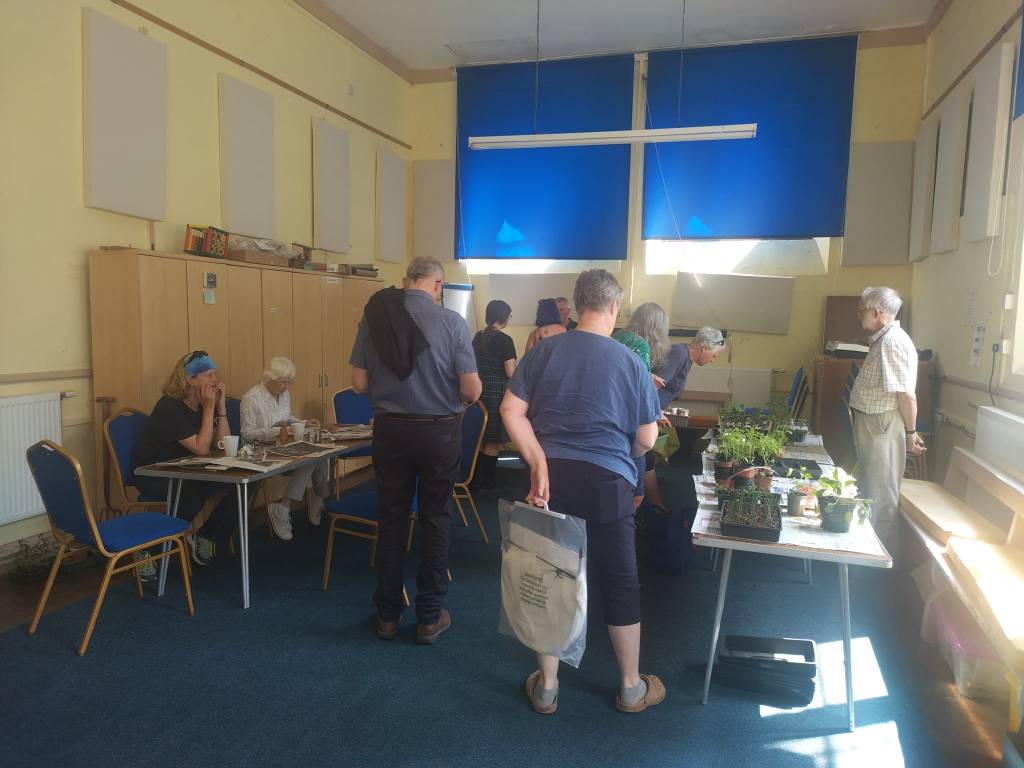
In May, St Bees Green Future ran a plant, seed and tool swap. This was in response to interest in garden-themed swaps from the suggestion box for St Bees Swap Together events. We also ran an activity to make little pots out of newspaper, which proved popular, allowing attendees to sow their seeds at the event. A volunteer from Cumbria Master Composters supported the event, providing information and advice about home composting.
Lots of plants and seeds were swapped and some of the tools were donated to the Community Garden. There were some surplus tomato, leek and onion plants leftover from the event, which were placed on the Community Garden’s stall at the entrance to the Priory drive.
The plan is to run a further plant and seed swap in the future, so look out for details.
The start of the Community Garden came in 2019. A group of enthusiastic volunteers turned up to push open the gate to see what lay inside the walled garden at the side of the vicarage. We quickly found out that the answer was five-foot brambles from front to back. Undaunted, we began slashing and digging and by the end of the day we could see about a third of the area.
A meeting was held to set out the group’s future plans and it was agreed: we wanted to grow fruit, vegetables and flowers, we wanted to improve areas of the garden for wild flowers, and we wanted to make the garden a place for people to meet and garden communally. A meeting was held with Cumbria Wildlife Trust who helped us draw up a wildlife management plan and provided us with plug plants and money for some tools.
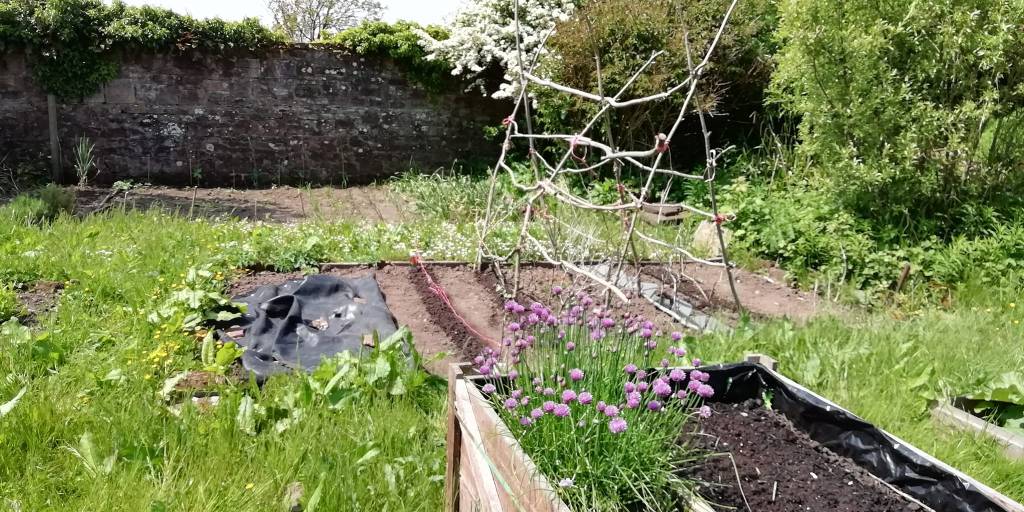
So, what progress has been made? Well, we can now see the back of the garden. The brambles are not yet conquered, but more of the garden is uncovered. We plan to keep some for the birds and wildlife, but by lifting the tree canopy and clearing the bramble in the centre of the garden, we now have the beginnings of a wildflower garden. The front third has been turned into a productive vegetable and flower garden. There are four raised beds for those who want to garden without bending.
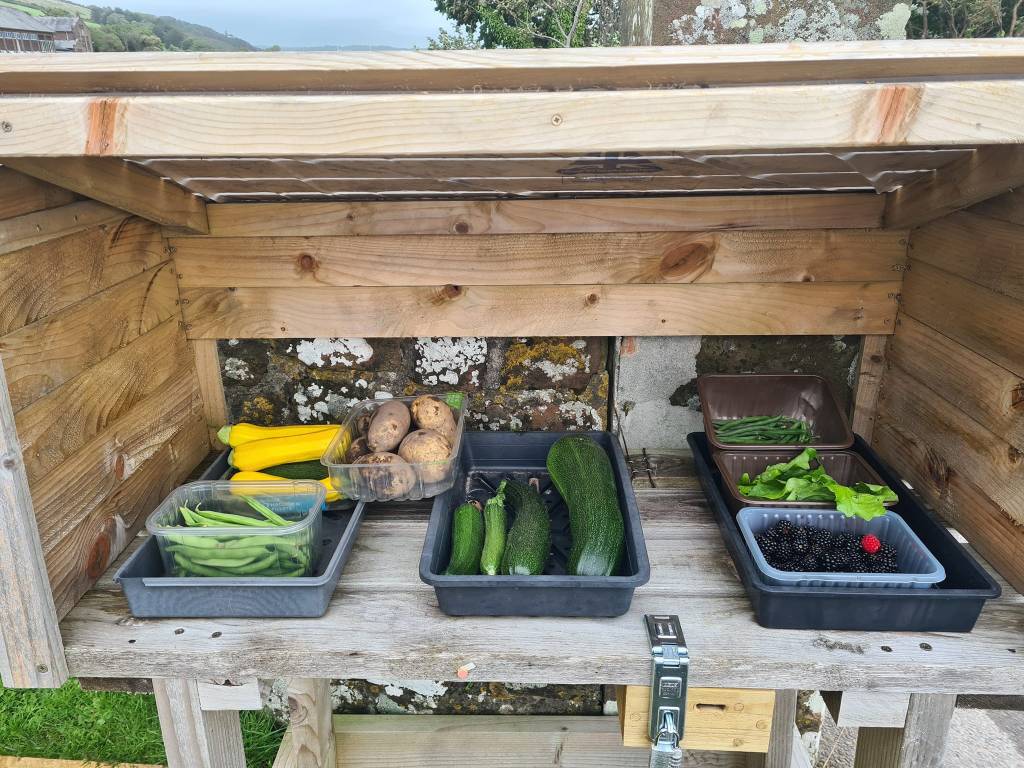
Surplus produce is placed on the Community Garden Produce Stall for anyone to pick up and the donations left means that the garden is now largely self-financing. Spare flowers are available for Church use, to reduce the air miles in providing displays. We have held a number of Open Days and enjoyed visits from the Beavers who sowed seeds which have grown successfully. There is a “new to us” greenhouse at the rear of the garden, carefully rebuilt for us from one donated. We also have a garden bench, made by the inmates at Haverigg, for anyone who just wants to sit and chat rather than perspire over a spade!
We have some plans for the future. We want to uncover more of the garden from the brambles; we haven’t yet decided what to put in the areas uncovered but it will evolve. We would like to put a gate in-between the Community Garden and Priory Paddock, making access to the garden for the village easier. We have uncovered some wonderful photographs from the 1970s of the area before the current wall was built, when the area was still used for farming, showing that the two areas used to be connected.
We are always keen to have more volunteers. We normally meet on a Saturday morning, but in the growing season volunteers also pop in to do jobs midweek. If you would like to join us, feel free to pop in any Saturday morning or contact Rev. Becky.
Thank you for this guest post, which was written by volunteers from the Community Garden in St Bees.
Bees, wasps, hoverflies, butterflies, moths and beetles play an essential role in pollinating flowers, shrubs, trees and crops. However, due to the loss of flower-rich habitats over the last 50 years, pollinator species have declined. Developing habitats that encourage pollinators can help to reverse their decline.
Cumbria Wildlife Trust has been delivering its Planting for Pollinators project, working with communities across north and west Cumbria to increase flower-rich habits and increase number and diversity of pollinators.
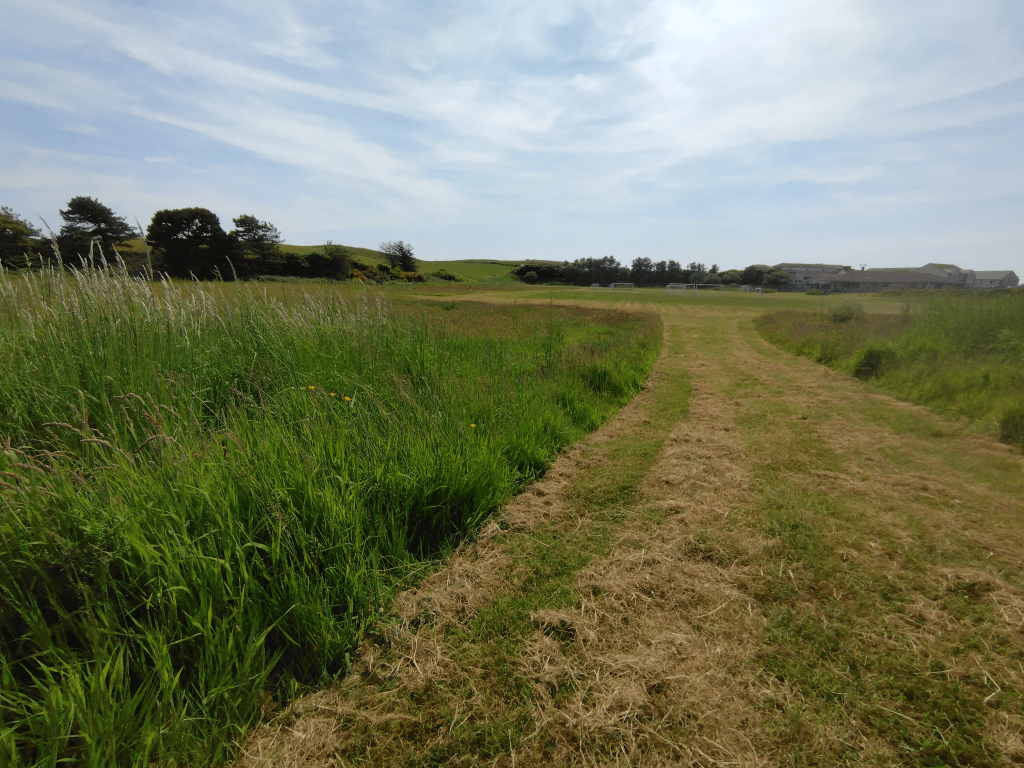
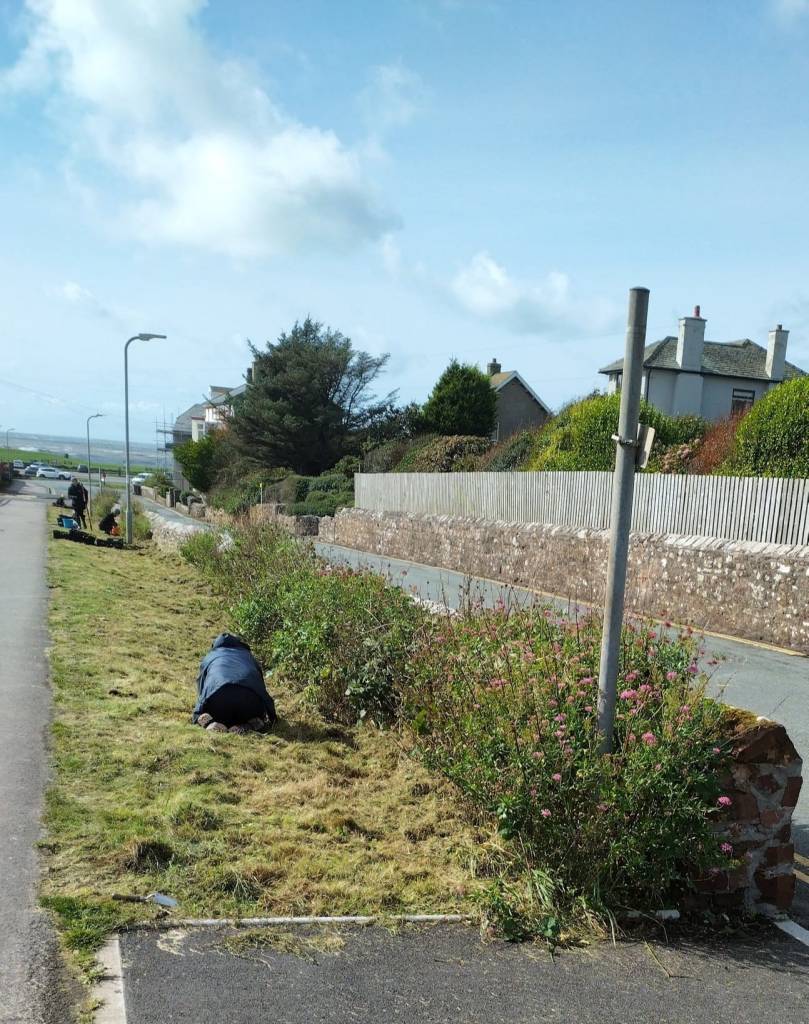
In St Bees Cumbria Wildlife Trust has worked with Adams Recreation Ground, the Community Garden and St Bees Parish Council to help develop pollinator habits in three areas of the village. In autumn 2022 wildflower seeds were sown at Adams Recreation Ground to create a wildflower meadow and wildflower plug plants were also planted in the Community Garden. This September wildflower plug plants were planted in the verge behind the wall on Beach Road with the help of pupils from St Bees Village School.
One of the volunteers from the Community Garden describes the help offered by Cumbria Wildlife Trust as part of this project:
“Last year Cumbria Wildlife Trust supported the Community Garden through the Planting for Pollinators Project. They met us and surveyed the grounds and what was there and set us up with a management plan containing lots of useful advice on how to manage the garden long term. They offered a work day of free labour (CWT volunteers) to help us clear more ground and in the autumn provided us with some wild flower plug plants and, finally, some tools to add to our kit. All much appreciated.”
Cumbria Wildlife Trust also provided St Bees Green Future with wildflower seed packets to distribute among residents keen to provide pollinator-friendly habitats in their own gardens, as we can all take action to help reverse the decline of pollinators.
Wildflower meadow at Adams Recreation GroundPlanting wildflower plug plants along Beach Road
 Sustainable St Bees